News
Fostering Inclusion in Communities and Meeting Client Needs: Dispatches from Fellows in Honor of Disability Pride Month 2024
/ Blog Post
In commemoration of Disability Pride Month, Equal Justice Works Fellows Charla Boley and Courtney Bergan shared their work advocating for people with disabilities. Charla is a 2023 Fellow sponsored by DLA Piper and Microsoft Corporation and hosted by Benefits Law Center. Courtney is a 2023 Fellow hosted by Disability Rights Maryland.
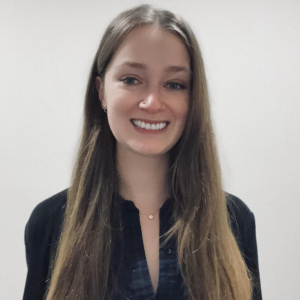
Social Security benefits are both extremely difficult to gain and extremely easy to lose. At the Benefits Law Center, I work with multicultural families with disabilities as they navigate the complex systems of the Social Security Administration (SSA).
What does an average day working with your clients look like?
My daily work with clients involves breaking down the confusing rules of the SSA in an understandable way to assist clients in deciding what next steps they can take, whether they want to gain benefits, restart terminated benefits, or deal with an overpayment of benefits. My level of representation varies, and I might be giving one-time advice, or I might be preparing to represent a client at an administrative hearing.
What have you accomplished/ learned so far?
Every day my clients impress me with their tenacity and perseverance. Many of them have limited English proficiency and are immigrants who are still learning about the ways the United States government functions. At the same time, they are caring for children with complex health needs and taking care of their families. They might also have disabilities themselves. Whenever I’m stuck on hold with SSA or frustrated by their processes, I remember how important it is to be patient and keep trying.
What are you most excited about continuing your project?
Language access is a huge barrier for people involved with SSA. Important letters are sent only in English and many of my clients report difficulty requesting an interpreter from SSA. I will continue documenting my client’s struggles in this area and hope to collaborate with other advocates noticing and fighting the same issues.
What is something that you would like people to take away from this awareness month?
People with disabilities struggle every day to achieve stability by gaining Social Security benefits. Right now, an application for Disability or Supplemental Security Income can take a year or longer before a determination is made. At least half of all applicants in Washington State will be denied. It can take several years to make it all the way through to an administrative law hearing where a claimant’s chances of approval are once again about 50-50 and where their disability is questioned and interrogated with little, if any, compassion or respect. I would like people to remember and hold space for people fighting for not only economic stability but for the recognition of their own lived experiences.
I would like people to remember and hold space for people fighting for not only economic stability but for the recognition of their own lived experiences.
Charla Boley /
2023 Equal Justice Works Fellow
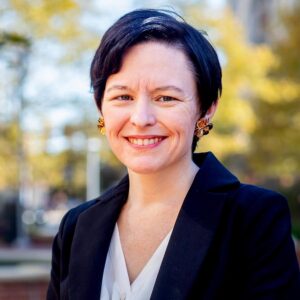
At Disability Rights Maryland, I advocate for the civil rights of people with mental health disabilities by working to enhance access to culturally responsive, choice-based community resources that are needed to prevent unjust institutionalization.
What does an average day working with your clients look like?
Effectively advocating for clients with mental health disabilities on a day-to-day basis first and foremost involves working with clients to understand their communication needs and any accommodations that may be necessary to facilitate an effective working relationship. Once I understand my clients’ needs and wants, we work together to devise an advocacy strategy, which can involve informal advocacy such as attending treatment team meetings with clients, writing demand letters, legislative advocacy, or litigation.
What have you accomplished/ learned so far?
My Fellowship project has allowed me to better understand the resource barriers that people with mental health disabilities are experiencing in Maryland through both individual representation and community collaborations. Because structural stigma is a significant contributor to unnecessary institutionalization, I have been working to change attitudes around mental health disabilities by publishing a law review article on the rights to choose and refuse mental health care and presenting at several conferences on the importance of centering the voices and choices of people with mental health disabilities. I also co-founded the Maryland Coalition for Mental Health Choice with On Our Own of Maryland to organize advocacy against coercive mental health policies and for access to culturally responsive, choice-based community mental health support.
What are you most excited about continuing your project?
I am excited to continue working to combat the structural stigma and resource barriers that people with mental health disabilities experience on a daily basis by continuing to represent clients who are denied the resources they need to remain in or return to the community. I also drafted and proposed legislation to create a self-directed mental health care program in Maryland, which I hope to continue advocating for with the Maryland Coalition for Mental Health Choice. Self-directed mental health care is a model of care that values self-determination and is effective at preventing unnecessary institutionalization by holistically addressing unmet care needs.
What is something that you would like people to take away from this awareness month?
Because we have a long history of using the law to compel mental health treatment, rather than provide for people’s needs, many forget that mental health disabilities are indeed disabilities that entitle individuals to rights and accommodations under the law. Ultimately, I hope that we can begin to reframe how we use the law to support people with mental health disabilities by holding systems accountable to provide for individuals stated needs rather than imposing what we think they need. People with mental health disabilities are the best experts on their own experiences!
Ultimately, I hope that we can begin to reframe how we use the law to support people with mental health disabilities by holding systems accountable to provide for individuals stated needs rather than imposing what we think they need. People with mental health disabilities are the best experts on their own experiences!
Courtney Bergan /
2023 Equal Justice Works Fellow
To learn more about Fellows working to protect the rights of people with disabilities, click here.