News
Resilience Redefined: Reflecting on the 2025 Disaster Resilience Symposium
/ Updates
By Stetson University College of Law students Liam Cortez and Cecilia Chase
Last month, Equal Justice Works hosted its second Disaster Resilience Symposium in partnership with the American Bar Association’s Standing Committee on Disaster Response and Preparedness, and Stetson University College of Law. Set against the vibrant backdrop of Stetson’s Gulfport campus during Disaster Resilience Awareness Month, this year’s symposium gathered a dynamic mix of legal professionals, scholars, advocates, and community leaders committed to reshaping how we approach disaster preparedness, response, and recovery.
Held March 18-19, 2025, the event marked a pivotal moment for the disaster resilience movement. With programming that reflected the Symposium’s theme – Resilience Redefined: Charting the Path Forward – attendees engaged in deep reflection on the 20th anniversary of Hurricane Katrina, examined pressing issues through an equity lens, and explored actionable strategies to build stronger, more just communities.
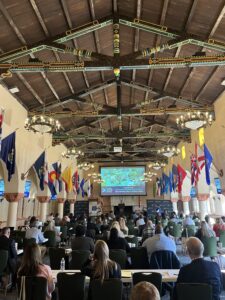
From interactive workshops and policy-driven panels to thought-provoking keynotes, the Symposium offered not only insights but space for collective visioning and connection across sectors.
With over 100 participants and 13 engaging sessions, the Symposium focused on urgent topics now facing the disaster law field – from disability accessibility and equitable FEMA aid to the continually evolving need for having local partnerships to drive effective response. One message was continually emphasized: resilience is no longer just about bouncing back – it’s about reimagining relationships, responsibilities, and responses before the next disaster strikes.
One message was continually emphasized: resilience is no longer just about bouncing back – it’s about reimagining relationships, responsibilities, and responses before the next disaster strikes.
Sessions throughout emphasized the growing need for locally led, community-centered, strategies. As noted by keynote speaker Ranie Thompson, Equal Justice Works Katrina Legal Fellow Alumni & Executive Director, Disability Rights Louisiana, who said: “To be effective and impactful, you must be on the ground.” This idea was further elaborated on by FURIA, a not-for-profit organization from Puerto Rico, which shared an innovative method for preparing communities to operate independently and have more agency knowledge within them.
The Symposium also addressed the ever-existent issue involving lack of communication between federal disaster policy and local realities. A panel of experts was at the helm of this issue, examining and explaining the application of FEMA’s 50% rule and the need for local implementation.
To be effective and impactful, you must be on the ground.
Ranie Thompson /
Equal Justice Works Katrina Legal Fellow Alumni
Executive Director, Disability Rights Louisiana
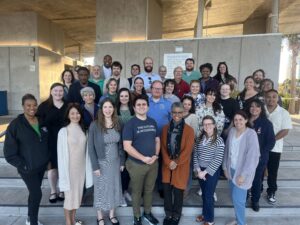
On the second day, attendees participated in a disaster and poverty simulation – a hands-on workshop made to showcase barriers faced by many in getting necessary disaster relief. Navigating insecurities in accessing food, housing, and medical care during the simulation, participants were able to develop a deeper understanding of how disaster response often fails to provide for the needs of underserved and low-income communities. A thoughtful debrief followed, which was a useful tool to dissect how a community does not have a monolith of experiences.
As our country reflects on 20 years since Hurricane Katrina – an event that opened our eyes to deep seeded inequities – the 2025 Disaster Resilience Symposium reaffirmed our commitment to moving forward with conviction, compassion, and collaboration. In redefining resilience, we are not only preparing for future disasters but rather charting a course for a more equitable and just future.