News
Advocates for Accessibility: Cecilia Ballinger on How to Take Action this Disability Pride Month
/ Blog Post
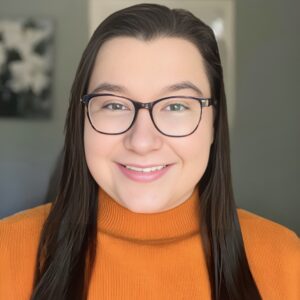
By Cecilia Ballinger , 2024 Equal Justice Works Fellow with the Alabama Disabilities Advocacy Program. Cecilia works to provide educational and medical advocacy to children with complex medical conditions across Alabama and is sponsored by Faber Daeufer & Itrato.
This July marks the 35th anniversary of the Americans with Disabilities Act (ADA), a landmark piece of legislation that prohibits many forms of disability discrimination. As we work towards making the guarantees of the ADA into something to be exceeded, rather than hard-fought, I reflected on the work of self-advocates like Judy Heumann , who staged the 26-day “504 sit-in” to demand the long-awaited federal regulations for Section 504 of the Rehabilitation Act of 1973, and Jennifer Keelan-Chaffins, who was only eight years old when she left her wheelchair behind and crawled up the Capitol steps during the “Capitol Crawl” to call for passage of the ADA. These activists fought for inclusion and access to be standard, something that we continue to fight for. I have been overwhelmed at times during my Fellowship with the progress we have not yet made. On a national level, individuals with disabilities continue to face barriers in employment, education, healthcare, and housing, among other things. The Department of Justice, the Department of Education, and Health and Human Services have historically fought for the enforcement of federal anti-discrimination statutes, like the ADA, though this role moving forward is in question.
Within my home state of Alabama, access to care and services are extremely challenging. Lack of transportation and internet access, as well as patterns of rural hospital closures have worsened this issue, leaving individuals across the state scrambling to find providers in their area. These issues will only worsen in Alabama and other states if federal program cuts on the horizon are passed. As it is now, the medically complex children I serve through my Fellowship frequently cannot find nurses to care for them for years at a time. Knowledge of home and community-based services available through Medicaid programs is scarce among families and providers alike. Some of my clients have been restrained and secluded in school, while others have been brushed to the side and put on homebound programs with minimal services. Services that families can access are largely funded with federal dollars, and, in many cases, are all that stand between individuals and institutional care, where they’d live in a clinical setting without the comfort of their homes and families. Concerns have been raised about the quality of care in such institutions.
With looming cuts to programs that offer services to individuals with disabilities, my host organization included, it is all too easy to focus on what could be lost. While it is important to understand what is at stake, I have been reflecting on the ways in which we can advocate and make a difference for each other, however small our advocacy may seem. Through local advocacy, glimmers of hope for the future shine through and give me something to hold onto through days that feel hopeless.
Through local advocacy, glimmers of hope for the future shine through and give me something to hold onto through days that feel hopeless. This Disability Pride Month, and beyond, I challenge all of you to find something you can do to advocate for disability rights. You can do this by starting with your community and the places where you have influence.
Cecilia Ballinger /
2024 Equal Justice Works Fellow
This Disability Pride Month, and beyond, I challenge all of you to find something you can do to advocate for disability rights. You can do this by starting with your community and the places where you have influence. You can:
- Look for accessible features in your community, like accessible parking spaces, curb cuts, push buttons for doors, and accessible routes. If what you find is lacking, bring it to the attention of the city or business owner.
- Support fundraisers and events that support individuals with disabilities and contact local disability rights groups to ask for ways to get involved on a local level.
- Consider whether your workplace could partner with vocational rehabilitation programs to provide meaningful employment opportunities.
- Use plain language as a default when communicating with clients or the public.
- While voting, check your polling site for accessibility and request poll workers to bring out an accessible booth. Report inaccessibility to voting rights hotlines and organizations.
- Work with organizations serving blind individuals to have Braille materials available.
- Educate yourself on the intersection of disability and your profession and offer services to individuals with disabilities if you are able.
Most of all, engage with the disability community with humility and a willingness to learn. Ask questions and take time to listen to the answers without trying to immediately solve the issues you find.
Some of my most impactful work is not done across from opposing counsel. Rather, it is done in the community where I build relationships, share plain language resources, and train people to be their own advocates.
Cecilia Ballinger /
2024 Equal Justice Works Fellow
Some of my most impactful work is not done across from opposing counsel. Rather, it is done in the community where I build relationships, share plain language resources, and train people to be their own advocates. It is done by listening to the lived experiences of people and considering how I can empower them, rather than just “fix” their problems. It is done by giving clients honest evaluations of their situation, even when my answer is not ideal, and taking the time to ensure that they understand why their case may not be successful and what a successful case may look like in the future.
Your small actions have the potential to make waves, and advocates of all kinds are needed. Whether you are providing services, creating policy, organizing local events, advocating in the courts and administrative processes, creating and distributing informational resources, providing financial backing to others, or creating places where all people can be recognized for their strengths and have their differences not only accepted but embraced, you have a role to play in this movement. Local action can create national change, and each action moves us a bit closer to not only meeting, but exceeding, the ideals of the ADA and creating a nation in which all individuals, regardless of disability, are able to contribute and find meaning.
To learn more about the Fellows working to advance disability rights, click here. To learn more about Cecilia’s project, click here.