News
How the Opioid Crisis Response Program Is Creating Pathways to Recovery
/ Updates
The opioid crisis is often told in numbers, but the real impact is found in the daily challenges people face when seeking stability and treatment. Equal Justice Works’ Opioid Crisis Response Program was created to place legal services directly where communities need them most. Read on to learn about the impact of the inaugural class of Opioid Crisis Response Program (OCRP) Fellows.
In September 2024, Equal Justice Works mobilized six OCRP legal Fellows in Kentucky, Ohio, and New York to help confront the devastating impact of the opioid epidemic. These Fellows work at the intersection of health care, legal services, and community recovery — reducing barriers to treatment, advocating for stable housing, and increasing community understanding of how legal assistance opens pathways to long-term recovery.
For individuals living with Opioid Use Disorder (OUD), legal challenges often derail progress towards stability. A criminal record, domestic violence, unsafe housing, or a custody dispute can make it nearly impossible to sustain employment or keep a family intact. OCRP Fellows receive training in trauma-informed care and stigma-free advocacy, ensuring clients are met with dignity while their legal needs are addressed.
![Graphic reads: In the first year of the Opioid Crisis Response Program, Fellows helped [GRAPHIC IMAGE OF A HOUSE] 1,000 + households achieve housing stability, clear criminal records, and resolve critical family matters. The Equal Justice Works logo sits at the bottom.](http://www1.equaljusticeworks.org/wp-content/uploads/2025/12/OCRP-Recap-Graphic-300x300.png) To date, this cohort of Opioid Crisis Response Fellows has served more than 500 individuals and helped over 1,000 household members achieve housing stability, obtain criminal record expungements, and resolve family matters such as divorces and custody cases. For those affected, these cases reflect a fresh start and renewed hope for the future.
To date, this cohort of Opioid Crisis Response Fellows has served more than 500 individuals and helped over 1,000 household members achieve housing stability, obtain criminal record expungements, and resolve family matters such as divorces and custody cases. For those affected, these cases reflect a fresh start and renewed hope for the future.
In 2024, Fellows dedicated about 81% of their time to criminal record expungement work. A criminal record is one of the strongest predictors of economic instability; removing that barrier is often the gateway to employment, stable housing, and long-term recovery.
2024 Fellow Maegan Pirtle illustrated this impact when she successfully expunged a felony drug conviction that constrained her client’s opportunities for over a decade. Although the client transformed her life, the lingering conviction continued to dictate her future. Thanks to Maegan’s skilled advocacy, the court granted the expungement — allowing the client to move forward free from the weight of the past.
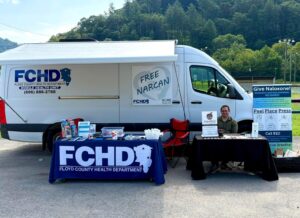
Clients served this year reported feeling more confident in understanding their legal rights after working with an OCRP Fellow. The Fellows also strengthened community knowledge by conducting outreach and trainings that reached more than 2,500 community members and stakeholders and collaborated with 104 community partners.
One of the most effective elements of the OCRP has been the Fellows’ consistent presence in health care settings, where trust is built and stigma is reduced. Our Fellows built and maintained 22 Medical Legal Partnerships (MLPs) across the Opioid Crisis Response Program. These MLPs provide clients with a single point of access for their legal needs. Fellows also trained 82 medical providers, case managers, and recovery specialists to identify common legal problems affecting patients in recovery — extending the program’s impact far beyond individual cases.
2024 Fellow Julia Cummings saw firsthand how a consistent presence in the clinic is critical to building trust with patients and staff. She established a Legal Help Desk at Urban Health Plan’s Equality Clinics, which serve primarily LGBTQIA+ patients, to ensure clients can meet her in a safe, familiar environment. This model has already deepened relationships with clinic staff and increased patients’ comfort in seeking legal support.
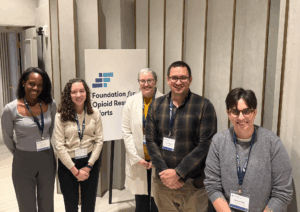
In addition to direct services, OCRP Fellows engaged in policy advocacy to uplift the needs of the communities being served. Fellows participated in 16 policy and advocacy meetings, providing recommendations on how to address barriers to recovery. Fellows successfully advocated for education of court personnel and established referral relationships with judges.
For example, Fellow Carrie Stambaugh worked with the Kentucky Access to Justice Commission to address statewide inconsistencies in citation expungements, leaving eligible individuals with records that should have been cleared. Because of Carrie’s zealous advocacy, the Commission agreed to implement statewide trainings for clerks to ensure uniform treatment of expungement cases going forward. This change will benefit future applicants long after Carrie’s Fellowship ends.
As the OCRP enters its second year, Equal Justice Works is proud and committed to supporting these dedicated Attorney Fellows who are expanding access to justice for individuals and families affected by OUD. As one supervisor shared, “Without the opioid grant from EJW, our organization would not have been able to provide full representation for clients.”
Without the opioid grant from EJW, our organization would not have been able to provide full representation for clients.
Anonymous Supervisor /
Opioid Crisis Response Program
By addressing an unmet need, reducing barriers to stability, and advancing systems-level solutions, Fellows in the OCRP are not only transforming lives — they are reshaping the systems that impact recovery.
The Opioid Crisis Response Program is made possible thanks to the generous support of the Foundation for Opioid Response Efforts (FORE). To learn more about the Opioid Crisis Response Program, click here. Interested in supporting the OCRP? Reach out to [email protected] for more information on how to get involved!