News
Tackling the Eviction Crisis: Equal Justice Works Welcomes a New Cohort of Fellows to the Housing Justice Program
/ Updates
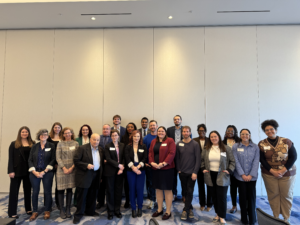
Laura Roach, the senior manager of Fellowship implementation at Equal Justice Works, recently shared the work, success stories, and the new class of Fellows in the Housing Justice Program.
The Equal Justice Works Housing Justice Program mobilizes lawyers, law students, and community organizers. Fellows serve two years at legal services organizations, where they provide direct legal services, conduct education and outreach, and advocate to advance the rights of renters. As a cohort, they tackle the eviction crisis in a community-responsive manner.
Each year approximately 3.6 million eviction actions are filed against tenants in the United States. But an eviction filing is merely an allegation of a lease violation, and tenants have a right to due process under the law. The stakes in eviction cases are especially high for tenants, as their homes are jeopardized, and attorneys can assert their rights and legal defenses, including habitability complaints. While landlords are frequently represented by legal counsel, more than 90 percent of tenants appear without representation, often because they are unable to afford an attorney. For many tenants, having legal representation can be life-changing; tenants who are represented by attorneys are more than 4.4 times more likely to remain in their homes than those without.
More than 90 percent of tenants appear without representation, often because they are unable to afford an attorney... tenants who are represented by attorneys are more than 4.4 times more likely to remain in their homes than those without.
Laura Roach /
Senior Manager of Fellowship Implementation
That includes one client, Antonia* in South Carolina, who feared she and her family would be ordered out of their home. In Antonia’s situation, the landlord refused to accept her rent payments and berated her and her family with racial slurs. He then filed an eviction action, falsely claiming that Antonia failed to pay rent. With the support of her attorney, an Equal Justice Works Housing Justice Fellow, Antonia was able to secure an on the record admission from the landlord she had not violated the lease. Thanks to the Fellow’s zealous advocacy, the Magistrate Court dismissed the baseless eviction, and Antonia was able to remain in her home.
With the support of her attorney, an Equal Justice Works Housing Justice Fellow, Antonia was able to secure an on the record admission from the landlord she had not violated the lease. Thanks to the Fellow’s zealous advocacy, the Magistrate Court dismissed the baseless eviction, and Antonia was able to remain in her home.
Laura Roach /
Senior Manager of Fellowship Implementation
The clear disadvantage tenants face in eviction proceedings undermines trust in the American legal system’s ability to fairly adjudicate landlord-tenant disputes. Without counsel, tenants are forced to navigate unfamiliar and complex legal procedures alone. This is a structural flaw in the civil legal system – one that allows low-income tenants to risk losing their homes simply because they cannot afford an attorney.
That’s why Equal Justice Works is proud to announce the new cohort of 2024-2026 Housing Justice Program Fellows. These fourteen Fellows will serve at eight legal aid organizations across Maryland and South Carolina, states with two of the highest eviction filing rates in the country. To date, Fellows have collaboratively prevented more than 9,700 evictions and secured over $4.2 million in economic benefits for their clients. Fellows have also trained more than 16,000 low-income tenants on their legal rights and helped community leaders organize and reclaim community power typically denied to them.
The new cohort of 2024-2026 Fellows in the Housing Justice Program will amplify the impact of individual attorney and community organizer Fellows by leveraging a network of local organizations and national experts across multiple states. In addition to providing direct representation, Fellows will collaborate to strengthen legal protections for renters and shift narratives in the courtroom – helping to humanize tenants in the eyes of judges and promote fairer outcomes for renters across the country.
The Housing Justice Program includes Fellows hosted across Maryland and South Carolina. To learn more about Fellows in the Housing Justice Program, click here. The Housing Justice Program is made possible thanks to the generosity of Freedom Together Foundation, Maryland Legal Services Corporation, the South Carolina Bar Foundation, and Sisters of Charity Foundation of South Carolina.