News
Advocating for Legislative Reform to Improve Disaster Recovery: Lessons from Maui
/ Fellows in Action
By Nicholas J. Rivas, a law student at Stetson University College of Law and attendee of the Disaster Resilience Symposium
Last month, Sherry Peterson, an Equal Justice Works Fellow in the Disaster Resilience Program, shared her experiences working with survivors of the Maui wildfires in a breakout session at the Disaster Resilience Symposium. Titled “Advocating for Legislative Reform to Increase Financial Preparedness and Recovery in Disasters”, Sherry’s session highlighted critical shortcomings in insurance policies, the pressing need for legislative reform, and how she is leveraging her Equal Justice Works fellowship to drive systemic change.
During her presentation, Sherry highlighted the systemic issue of underinsurance. In Maui, many survivors discovered too late that their homes were insured for far less than their actual rebuilding costs – some by as much as 60%. Worse still, most policies only provided 12 months of Additional Living Expenses (“ALE”), which cover temporary housing and basic living costs after a disaster – not nearly enough time for residents to rebuild.
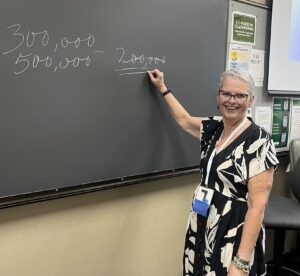
Sherry pointed out that complicated insurance jargon and limited policyholder awareness often led to poor coverage decisions. For example, many people do not understand the difference between “actual cash value” and “replacement cost,” leading to significant financial loss (actual cash value considers an item’s depreciated value, while replacement cost value covers the full cost of replacing an item with a new, similar item). Policyholders also faced rigid inventory requirements, forcing them to relive trauma by going through their destroyed home and itemizing lost possessions, sometimes down to listing every book or CD title that they owned. One woman that Sherry assisted initially had her property loss valued at just $250,000.00 due to issues with meeting the insurer’s inventory requirements. After weekly meetings and detailed documentation with Sherry’s assistance, Sherry and her client were able to properly value her loss at over $1 million.
Another problem that many survivors encountered was the issue of having multiple adjusters (sometimes up to eight per claim). This further complicated the claims process for the survivors, as each new adjuster often restarted the process, delaying resolutions and resulting in redundant work for survivors to make their claims. Survivors also struggled when they wanted to rebuild in a different location or when insurance companies failed to honor evacuation-related ALE claims.
Another problem that many survivors encountered was the issue of having multiple adjusters (sometimes up to eight per claim). This further complicated the claims process for the survivors, as each new adjuster often restarted the process, delaying resolutions and resulting in redundant work for survivors to make their claims.
To combat these issues, Sherry proposed some common-sense legislative reforms: requiring ALE coverage up to 36 months, grouping inventory items, mandating insurance policies be reviewed on a more frequent basis, and prohibiting insurance companies from contracting around standard statues of limitations. She also called for banking reforms, such as requiring mortgage companies to pay interest on insurance funds held in escrow.
Community advocacy and legislative engagement were central to Sherry’s approach. She stressed the importance of coalition building, attending every public event where lawmakers might appear, partnering with organizations, and elevating survivor voices through testimony. Her relentless efforts resulted in multiple bills (HB1502, SB1141, SB1142) being introduced in Hawaii’s legislature. While most didn’t pass this session (Sherry still has hopes for SB1142!), she now understands the legislative process better and is poised for greater impact in the future.
As a law student, I found this session both inspiring and educational. It revealed the enormous influence that legal professionals can have beyond the courtroom through community outreach, policy advocacy, and legislative reform. Sherry left us with this: “If you see something that needs to be dealt with by your local or state government, don’t be afraid to jump in and just do it. if you don’t ask, the answer is always going to be ‘no’.”
If you see something that needs to be dealt with by your local or state government, don’t be afraid to jump in and just do it. if you don’t ask, the answer is always going to be ‘no’.
Sherry Peterson /
2024 Fellow in the Disaster Resilience Program
This session reminded me that the law isn’t just a set of rules, it’s a tool for justice, resilience, and systemic change. And sometimes, the most powerful advocacy starts with simply showing up and asking the right questions.
Click here to see the Equal Justice Works Fellows, like Sherry, who are using their expertise to promote more resilient communities in the Disaster Resilience Program. Learn more about the 2025 Disaster Resilience Symposium here. To read about Sherry’s project, click here.
This session reminded me that the law isn’t just a set of rules, it’s a tool for justice, resilience, and systemic change. And sometimes, the most powerful advocacy starts with simply showing up and asking the right questions.
Nicholas J. Rivas /
Law Student at Stetson University College of Law